![Gimeno de Flaquer, Concepción. Obras completas. II. Libros de ensayo (1900-1907). Conferencias y traducciones. Edición, introducción y notas de Antonio Francisco Pedrós-Gascón (Prensas de la Universidad de Zaragoza, 2025), 666 pp. [ISBN: 979-13-7014-004-5]](https://www.libarts.colostate.edu/wp-content/uploads/2026/02/obras-completas-ii-libros-de-ensayo-1900-1907-conferencias-y-traducciones-300x300.jpg)
This second volume brings together the essays published by Gimeno de Flaquer since 1900, texts that combine nineteenth-century regenerationism with incipient feminism: Gospels of Women (1900), The Intellectual Woman (1901), Women of the Latin Race (1904), the devout The Virgin Mother and her invocations (1907), and Women of Royal Lineage (1907). This is concluded by […]
Read More - Gimeno de Flaquer, Concepción. Obras completas. II. Libros de ensayo (1900-1907). Conferencias y traducciones.

This first volume of the Complete Works of Concepción Gimeno de Flaquer (Alcañiz, 1850-Buenos Aires, 1919), collects the essay books that the Aragonese author published in the 19th century: La mujer española (1877), La mujer juzgada por una mujer (1882), Madres de hombres célebres (1884), Mujeres, vidas paralelas (1893), and the etiquette book En el […]
Read More - Antonio Francisco Pedrós-Gascón
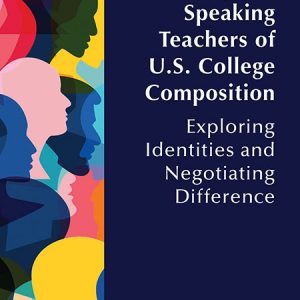
Featuring the voices of 22 linguistically and geographically diverse authors from a variety of institutional contexts throughout the United States, this edited collection calls attention to the experiences of an important and growing group of writing instructors: those who have learned English as an additional language. Focusing on this critical part of the growing linguistic […]
Read More - Nonnative English-Speaking Teachers of U.S. College Composition: Exploring Identities and Negotiating Difference

Writing program administrators have a long history of advocating for their students, fellow faculty, and programs. This advocacy includes defending their work against other entities that seek to dictate the work, challenging institutional policies that define student success in a narrow way or create untenable conditions for writing faculty workloads, and making antiracism a central […]
Read More - WPAing in a Pandemic and Beyond | Revision, Innovation, and Advocacy

A quintessentially American saga, the life of Joseph Smith offers believers and non-believers alike an epic narrative that inhabits both grounded history and a heavenly sphere of action. Zachary McLeod Hutchins renders Smith’s early life as a poetic narrative in two parts. The first introduces a very human Joseph and his youthful encounter with demonic […]
Read More - Joseph: An Epic

The Third Reich subjected some one hundred thousand individuals to a pernicious anti-homosexual campaign that included censorship, surveillance, medical experimentation, and death. Credible scholarship suggests that as many as fifteen thousand were interned in concentration camps, though the actual names and numbers of all those who suffered and died will never be known. Today, prevailing […]
Read More - The Pink Scar: How Nazi Persecution Shaped the Struggle for LGBTQ+ Rights

The Nature of Empire exposes the central role of modern imperialism in the development of contemporary environmentalism and environmental science. It builds this case through an investigation of five major modern empires: Britain, France, Russia, the Ottoman Empire, and Japan. This book offers readers a global environmental history of modern imperialism that actively engages Western-based […]
Read More - The Nature of Empire: Modern Imperialism and the Roots of the Anthropocene

Music Across Civilizations: A Global Journey explores how music shapes identity, community, and belonging across time and cultures. Written by Denise Favela Apodaca, the book guides students through diverse musical traditions, from ancient rituals to global contemporary sounds. Through listening activities and cultural reflection, readers discover how music expresses resilience, spirituality, and social change. Designed […]
Read More - Music Across Civilizations: A Global Journey

“onus is a spellbinding, poetic exploration of femininity in modern America. Devon Fulford confronts sex, objectification, abuse, and generational trauma in a voice that is both deeply personal and reverberating. These poems speak plainly, unflinchingly, and sometimes with surprising humor. Whether reflecting on childhood loneliness, online misogynistic violence, or not crying until you get in […]
Read More - Onus

An engrossing exploration of conflicting and complex narratives about the American West and its Native American heritage, violent colonial settlement, and natural history Drawing upon the mythic figure of William F. Cody, or “Buffalo Bill,” the Buffalo Bill Center of the West (BBCW) is complex of five museums in Cody, Wyoming, that celebrate the “spirit […]
Read More - The Haunted West: Memory and Commemoration at the Buffalo Bill Center of the West