Professor
About
Role
FacultyPosition
- Professor
Concentration
- Environmental
- Economics of Sustainable Development
- International Environmental Policy
- Ecological and Resource Economics
- Green Economy
Department
- Economics
Education
- Ph.D. Economics, University of London
Biography
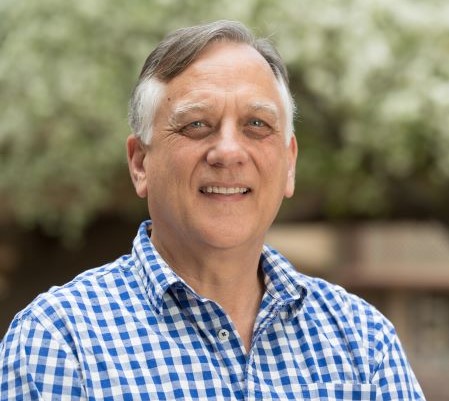
Edward B. Barbier is a University Distinguished Professor in the Department of Economics, Colorado State University and a Senior Scholar in the School of Global Environmental Sustainability. “One of the best-known environmental economists in the world” (Euromoney, 2019), Professor Barbier is a highly cited scholar on global environmental and sustainability issues. He has authored over 350 peer-reviewed journal articles and book chapters, written or edited 27 books, and published in popular journals. He has consulted for national, international and non-governmental organizations, including many UN agencies , the World Bank and the OECD, and is a Fellow of the Association of Environmental and Resource Economists.
Publications
Selected recent publications
Barbier, E.B. and J.C. Burgess. 2025. Economics for a Sustainable World: An Introduction to Natural Resource and Environmental Economics, Cambridge University Press, Cambridge and New York.
Barbier, E.B. 2025. “Why the green-technology race might not save the planet.” Nature 641:305-308. https://www.nature.com/articles/d41586-025-01352-0
Barbier, E.B. 2025. “Poverty-Disease-Environment Traps: Locally tailored solutions and collective action.” Proceedings of the National Academy of Sciences 122 (5), e2425786122 https://doi.org/10.1073/pnas.2425786122
Barbier, E.B. 2024. “Review Paper: Water and Economic Growth in Developed and Developing Countries.” Water Economics and Policy. 10(3), 243002. https://dx.doi.org/10.1142/S2382624X24300020
Barbier, E.B. 2023. “Greening the G7 Economies.” Oxford Review of Economic Policy 39(4):731-751. https://doi.org/10.1093/oxrep/grad039
Barbier, E.B. 2023. “Three climate policies that the G7 must adopt — for itself and the wider world.” Nature 617:459-461. https://www.nature.com/articles/d41586-023-01586-w
Barbier, E.B. 2022 “The Policy Implications of the Dasgupta Review: Land Use Change and Biodiversity.” Environmental and Resource Economics. 83:911-935. https://doi.org/10.1007/s10640-022-00658-1
Barbier, E.B. 2022. “The Economics of Managing Water Crises.” Philosophical Transactions of the Royal Society A. 380:20210295. DOI: 10.1098/rsta.2021.0295. https://doi.org/10.1098/rsta.2021.0295
Barbier, E.B. 2022. Economics for a Fragile Planet. Cambridge University Press, Cambridge and New York.
Barbier, E.B. 2021. “The Evolution of Economic Views on Natural Resource Scarcity.” Review of Environmental Economics and Policy 15(1):24-44.https://www.journals.uchicago.edu/doi/10.1086/712926
Barbier, E.B. 2021. “Habitat Loss and the Risk of Disease Outbreak.” Journal of Environmental Economics and Management 108:102451 https://www.sciencedirect.com/science/article/pii/S0095069621000346?via%3Dihub
Barbier, E.B. and J.C. Burgess. 2021. Economics of the SDGs: Putting the Sustainable Development Goals into Practice. Palgrave Macmillan, London and New York.
Barbier, E.B. and J.C. Burgess. 2020. “Sustainability and Development after COVID-19.” World Development 135:105082. https://www.sciencedirect.com/science/article/pii/S0305750X20302084
Barbier, E.B. 2020. “Greening the post-pandemic recovery in the G20.” Environmental and Resource Economics 76:685–703. https://link.springer.com/article/10.1007/s10640-020-00437-w
Barbier, E.B. 2020 “Is Green Rural Transformation Possible in Developing Countries?” World Development 131:104955. https://www.sciencedirect.com/science/article/pii/S0305750X20300814?via%3Dihub
Barbier, E.B., R. Lozano, C.M. Rodríguez and S. Troëng. 2020. “Adopt a carbon tax to protect natural forests.” Nature 578:213-216. https://www.nature.com/articles/d41586-020-00324-w
Barbier, E.B. 2019. Natural Resources and Economic Development, Cambridge University Press, Cambridge and New York, 2nd edition.
Barbier, E.B. 2019. The Water Paradox: Overcoming the Global Crisis in Water Management. Yale University Press, New Haven and London, 270 pp.
Barbier, E.B. and J.P. Hochard. 2019. “Poverty-Environment Traps.” Environmental and Resource Economics 74(3):1239-1271. https://link.springer.com/article/10.1007%2Fs10640-019-00366-3
Barbier, E.B. and J.C. Burgess. 2019. “Scarcity and Safe Operating Spaces: The Example of Natural Forests” Environmental and Resource Economics 74(3):1077-1099. https://link.springer.com/article/10.1007/s10640-019-00360-9
Barbier, E.B. and J.C. Burgess. 2019. “Sustainable Development Goal Indicators: Analyzing Trade-offs and Complementarities.” World Development 122:295-305. https://doi.org/10.1016/j.worlddev.2019.05.026
Barbier, E.B. 2019. “The concept of natural capital.” Oxford Review of Economic Policy 35(1):14-36. https://academic.oup.com/oxrep/article/35/1/14/5267896
Barbier, E.B. 2019. “How to make the next Green New Deal work.” Nature 565:6. https://www.nature.com/articles/d41586-018-07845-5
Barbier, E.B., J.C. Burgess and T.J. Dean. 2018. “How to pay for saving biodiversity.” Science 360 (6388): 486-488. https://doi.org/10.1126/science.aar3454
Barbier, E.B. and J.P. Hochard. 2018. “The Impacts of Climate Change on the Poor in Disadvantaged Regions” Review of Environmental Economics and Policy 12(1):26-47. https://www.journals.uchicago.edu/doi/full/10.1093/reep/rex023
Barbier, E.B. 2017. “Natural Capital and Wealth in the 21st Century.” Eastern Economic Journal 43(3):391-405. https://link.springer.com/article/10.1057/s41302-016-0013-x
Barbier, E.B., R.E. López and J.P. Hochard. 2016. "Debt, Poverty and Resource Management in a Rural Smallholder Economy." Environmental and Resource Economics 63:411-427. 2017 EAERE Award for outstanding publication in the journal Environmental and Resource Economics. http://www.eaere.org/content/award-outstanding-publication-ere
Courses
-
ECON 492 – Senior Seminar, Section 1 Fall 2025 – Managing the Global Water Crisis: An Economic Perspective
This course focuses on a key paradox of water resource management: Despite mounting evidence of growing over-use and scarcity of water, why is the world not mobilizing it vast wealth, ingenuity, and institutions to avert this crisis? Or, from an economic perspective, if water is valuable and scarce, why is it so poorly managed? To explore this paradox, the course focuses on the role of water in economic development, covering both local, national and global aspects of this relationship, and especially focusing on the role of institutions, governance and incentives in water resource management. It is designed as a senior seminar course and aims to give students a sense of current theories, debates, historical perspectives and methodologies concerning water and economic development, while also allowing students to develop and utilize their skills in economics to analyze a relevant water-related topic of their choice. The course is divided between lectures and readings, and a group project. Students will work together in groups to survey and analyze various central considerations in the economics of managing the global water crisis. The course will culminate in a poster session in which students share with each other the findings of their research.